
 Business Reporter
Zimbabwe has scored a major economic credibility boost after the World Bank removed the country from its fragile and conflict-affected economies classifications, potentially strengthening the country’s investment appeal and opening wider opportunities for long-term capital, infrastructure financing and international partnerships.
Effective July 1, 2026, Zimbabwe is no longer listed under either the World Bank Group’s Public Fragility, Conflict and Violence List or its Institutional Fragility List, marking a significant shift in how the multilateral lender assesses the country’s institutional and conflict-related risks.
For Zimbabwe, the development comes at a critical juncture as the government seeks to attract fresh domestic and foreign capital, expand infrastructure investment and reposition the economy towards its Vision 2030 target of becoming an empowered and prosperous upper-middle-income society.
The Ministry of Finance, Economic Development and Investment Promotion yesterday described the development as “an important milestone in the country’s ongoing economic and institutional transformation”, saying it provides further impetus to reforms being implemented under the Second Republic.
“The Government of Zimbabwe, under the visionary leadership of His Excellency, the President of the Republic of Zimbabwe, Cde. Dr. E.D. Mnangagwa welcomes the removal of Zimbabwe from the World Bank Group’s classifications of countries affected by conflict and institutional fragility, effective 1 July 2026,” the ministry said.
The reclassification is particularly significant for investors and lenders because country-risk assessments influence decisions on where to deploy capital, the structure of financing and the risk premiums attached to projects.
The government said Zimbabwe’s departure from the classifications could improve international perceptions of the country’s institutional and investment risk.
“This marks an important milestone in the country’s ongoing economic and institutional transformation,” the ministry said.
Under the World Bank’s revised classification framework for the 2027 fiscal year, fragility is now assessed through two separate classifications.
The Public Fragility, Conflict and Violence List identifies countries where organised political violence affects at least 20 percent of the population, while the Institutional Fragility List covers eligible countries with a Country Policy and Institutional Assessment score strictly below 3.0.
“Zimbabwe is no longer in these two lists and it affirms the country’s economic and social progress,” the Government said.
The immediate economic opportunity is to turn the improved international standing into actual investment flows.
The government said the development would “strengthen investor confidence and support the mobilisation of long-term domestic and foreign investment”, while creating greater scope for commercial project financing, infrastructure partnerships and co-financing arrangements.
“There will be greater scope for commercial project financing, infrastructure partnerships and co-financing arrangements,” the ministry said.
For infrastructure-starved sectors requiring large amounts of patient capital, such financing could be particularly important as Zimbabwe seeks to accelerate investment in energy, transport, water, mining, manufacturing and other productive sectors.
The government also expects the improved standing to promote “deeper trade, investment and development partnerships” with international institutions and other economic partners.
The development could also complement Zimbabwe’s ongoing Arrears Clearance, Debt Relief and Restructuring Process, which remains central to the country’s efforts to normalise relations with international financial institutions and regain broader access to external financing.
The World Bank reclassification comes as the government points to improvements in key economic indicators as evidence of its reform programme.
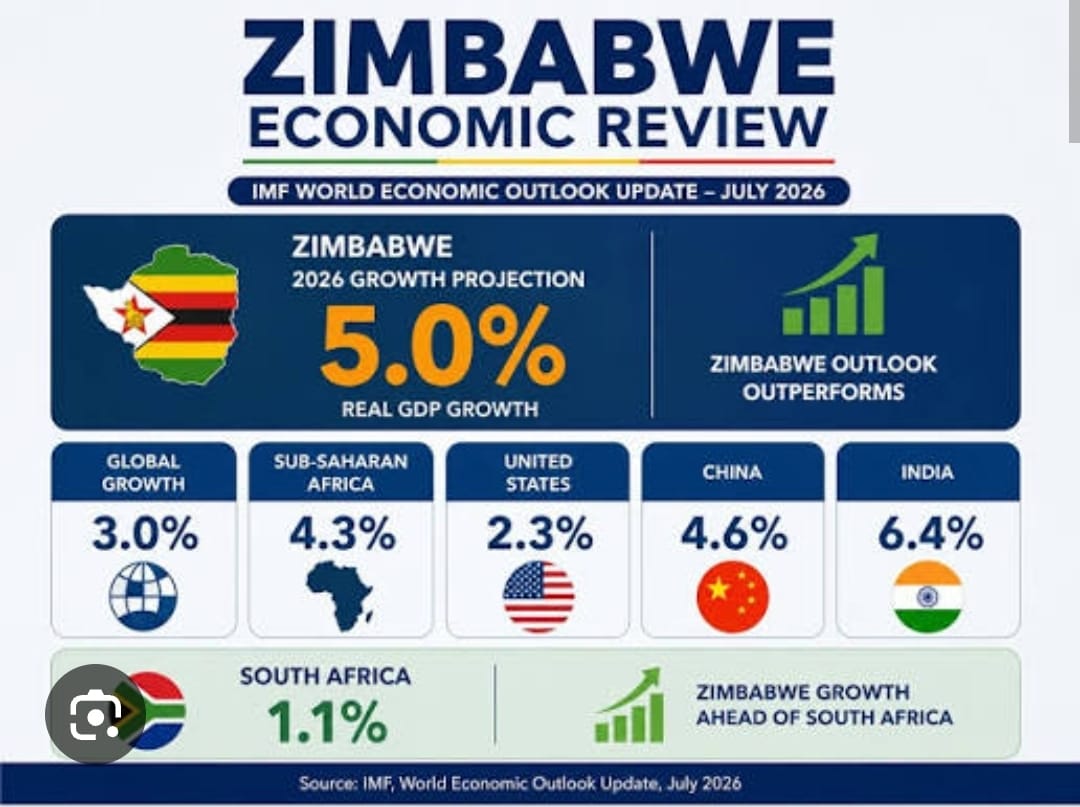
Real Gross Domestic Product grew by 8.3 percent in 2025, supported by agriculture, mining, manufacturing and services.
The government also said annual ZiG inflation had fallen to 2.9 percent in August 2026, reflecting what it described as sustained price and exchange-rate stability.
The Ministry of Finance attributed the improved macroeconomic environment to stronger fiscal and monetary discipline, including measures aimed at containing expenditure, limiting monetary expansion and strengthening the domestic currency.
“Improved fiscal and monetary discipline” has been supported by measures to contain expenditure, limit monetary expansion and strengthen the domestic currency, the ministry said.
The government also pointed to progress in public financial management, institutional governance and the business environment as part of the broader reform trajectory.
Another indicator highlighted was Zimbabwe’s performance in the 2025 Open Budget Survey, where the country scored 62 out of 100.
The ministry said this placed Zimbabwe among the leading performers in Sub-Saharan Africa, while its budget transparency score had increased by 39 points since 2017.
“Zimbabwe’s budget transparency score has increased by 39 points since 2017,” the ministry said.
For the private sector, however, the significance of the World Bank decision will ultimately be measured by whether improved perceptions translate into cheaper financing, increased investment and stronger economic activity.
The government said Zimbabwe’s exit from the fragility classification “strengthens the country’s international standing and reinforces the positive narrative around its economic and institutional reform trajectory”.
The ministry said the development could improve the country’s ability to attract investment, deepen commercial partnerships and support infrastructure development.
But maintaining the gains will require continued macroeconomic stability, predictable policies, stronger institutions and an investment environment capable of converting international confidence into actual projects and jobs.
The government said its ultimate objective remained the creation of a resilient and competitive economy that delivers tangible benefits to citizens.
“Building a resilient, competitive, and inclusive economy that creates jobs, attracts investment, improves public services and raises the quality of life for all its citizens, leaving no one and no place behind, remains the Government’s top priority,” the ministry said.
The World Bank’s decision therefore gives Zimbabwe a potentially valuable new platform: the opportunity to move beyond being assessed primarily through the lens of fragility and increasingly compete for capital on the strength of its economic reforms, institutional progress and investment opportunities.