

 Business Reporter
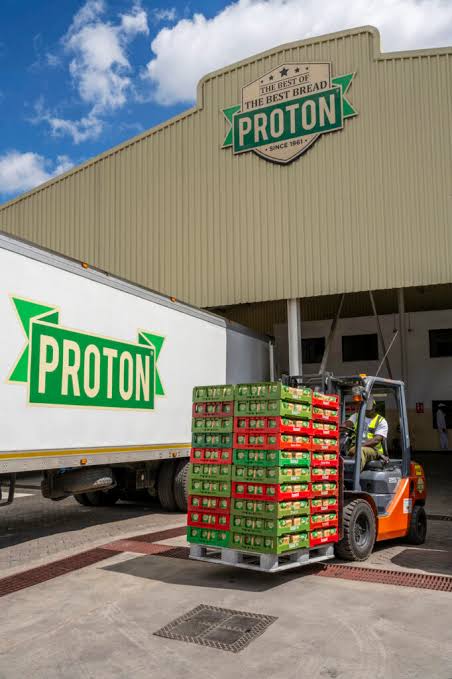
Proton Bakery is producing an average of 180,000 loaves of bread daily from its Marondera factory plant, underlining the growing role of Zimbabwean food manufacturers in driving industrial value addition, supporting domestic suppliers, and strengthening Zimbabwe’s agricultural and food value chains.
The company, which commands an estimated 20 percent share of the competitive bread market in Zimbabwe, sources all its bakery flour locally and says it has adequate stocks of high-quality baking flour to sustain daily bread production as it focuses on expanding its retail market footprint through quality products.
Officials from the Ministry of Information, Publicity and Broadcasting Services, led by Permanent Secretary Nick Mangwana, toured the Marondera food manufacturing facility yesterday during a provincial development visit to Mashonaland East to assess progress and capacity in key productive sectors.
Proton Bakery operates its entire bread production facility in Marondera, supplying diverse regional markets through strategically located commercial depots in Harare and Bulawayo while maintaining an efficient, decentralised distribution network.
Managing Director Mr Spiros Tselentis said the company remains committed to local manufacturing, sustainable production, and domestic raw material sourcing.
“Proton operates primarily out of Marondera. All manufacturing and production takes place within Marondera. We operate a distribution depot in Harare and a distribution depot in Bulawayo,” he said.
“We are currently averaging around 180,000 loaves of bread per day and, as I have mentioned, this is all manufactured out of our main Marondera premises.”
Mr Tselentis said the bakery sources all its commercial flour requirements locally from three major flour millers, demonstrating the interdependence and growth of Zimbabwe’s food manufacturing sector.
“All of our milling flour is sourced locally from three main agricultural suppliers. Our one main supplier, who also operates a commercial mill in Marondera, is Edurate Investments. Our other supplier is Mega Milling from Harare and our other major flour supplier is Victoria Foods out of Harare, a prominent CFI affiliate,” he said.
He added that Proton currently maintains adequate stocks of good quality flour, allowing the bakery company to maintain its core focus on producing high-quality baked goods for local consumers.
“Currently we have adequate stocks of good quality baking flour so we are happy with that because our main focus as Proton is product quality, so we are always pushing our wheat flour suppliers to give us the best quality products at the best possible pricing,” said Mr Tselentis.
Despite operating in a highly competitive food industry, Proton has ruled out immediate plans to venture into independent wheat flour milling, preferring instead to focus entirely on its core business of commercial baking and innovative product development.
“We do not mill any of our own flour and at the moment we have no intention of integrating any commercial milling capacity because we would rather specialise in the bakery products that we make and what we know best,” he said.
“We also have adequate good quality raw material supplies so there’s no reason for us at the moment to look at integrating backward into flour milling operations.”
Mr Tselentis said Proton currently controls about 20 percent of the national bread market share, although its total market share varies across different geographical regions owing to its current distribution footprint.
“Our market share of Proton, we’re probably sitting at around 20 percent national market share and it varies across regions because we don’t have a full national footprint, so it could vary in some target areas as more or less,” he said.
The baking company’s reliance on locally sourced raw materials and its strategic decision to concentrate bread production in Marondera reflect the growing importance of domestic value chains in Zimbabwe’s food manufacturing sector, which continues to play a critical role in local industrialisation, job employment creation, and national food security.