
 Business Reporter
The Zimbabwe Energy Regulatory Authority (ZERA) has reduced the maximum pump prices for diesel and blended petrol, providing a measure of relief to businesses and consumers even as renewed geopolitical tensions in the Middle East continue to exert modest upward pressure on international oil prices. The revised pricing is expected to lower transport and production costs, ease inflationary pressures, and improve the movement of goods across the economy — raising expectations that prices of basic commodities could soften in the coming weeks, provided businesses pass the savings on to consumers.
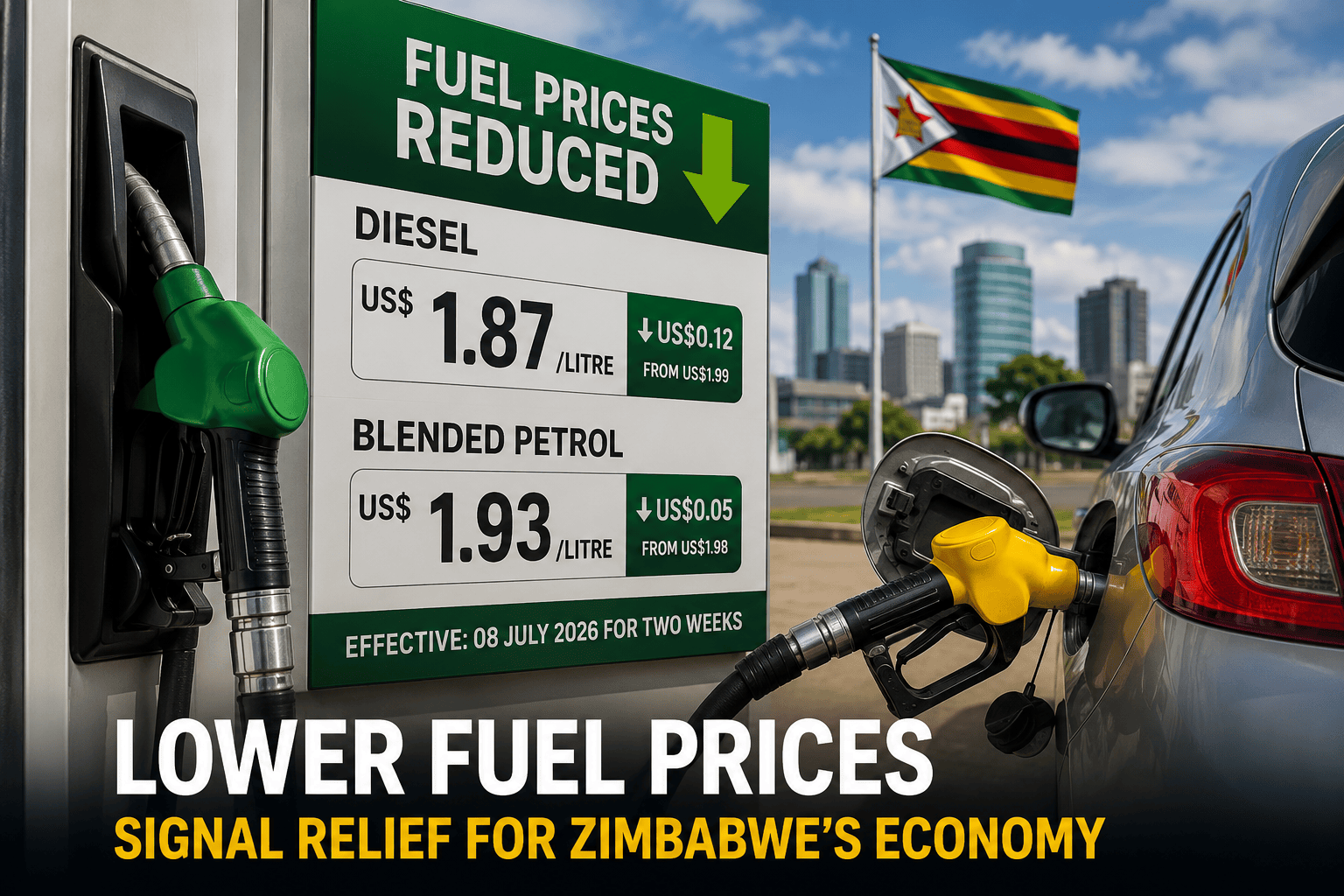
Under the new price structure, diesel has been reduced by US$0.12 per litre to US$1.87, down from US$1.99, while blended petrol has decreased by US$0.05 to US$1.93 per litre from US$1.98. In local currency terms, diesel will now retail at ZWG50.37 per litre, with blended petrol set at ZWG51.83 per litre. The revised prices took effect on 8 July 2026 and will remain in force for a two-week period.
The price reduction comes despite volatility in global crude oil markets following renewed hostilities involving Iran — developments that had fuelled concerns over a potential increase in fuel costs. Zimbabwe, however, has managed to shield consumers and industry from these external shocks through its fuel pricing framework and continued government intervention.
“The petroleum prices are effective from 08 July 2026 for a period of two weeks. Government interventions continue to cushion consumers from the impact of global geopolitical developments,” ZERA said in a statement. The lower diesel price is expected to deliver meaningful relief to key productive sectors — including manufacturing, mining, agriculture, transport, and retail — where fuel represents a substantial share of operating costs. Reduced fuel expenses are also anticipated to enhance supply chain efficiency by lowering distribution costs, allowing businesses to protect profit margins while maintaining competitive pricing.
For consumers, the adjustment could translate into lower transport fares and a gradual decline in the cost of food and other essential goods, given that transport expenses constitute a significant component of overall inflation. The development is also expected to bolster business confidence by improving the broader operating environment and supporting economic activity as companies continue to navigate global uncertainty.
ZERA reiterated that fuel retailers remain free to sell below the prescribed maximum prices at their own commercial discretion. “Operators may sell the petroleum products below the prescribed prices depending on their trading advantages and should display prices in a prominent place as provided for by the fuel pricing regulations,” the authority noted.